

Brief History of the Aloha Shirt
The Aloha shirt, often referred to as the Hawaiian shirt, originated in Hawaiʻi in the early 20th century, shaped by the islands’ multicultural influences and relaxed island lifestyle. Early versions were inspired by Japanese kimono fabrics, Chinese and Filipino tailoring techniques, and Western shirt silhouettes. These elements came together in lightweight, short-sleeve shirts designed for Hawaiʻi’s tropical climate.
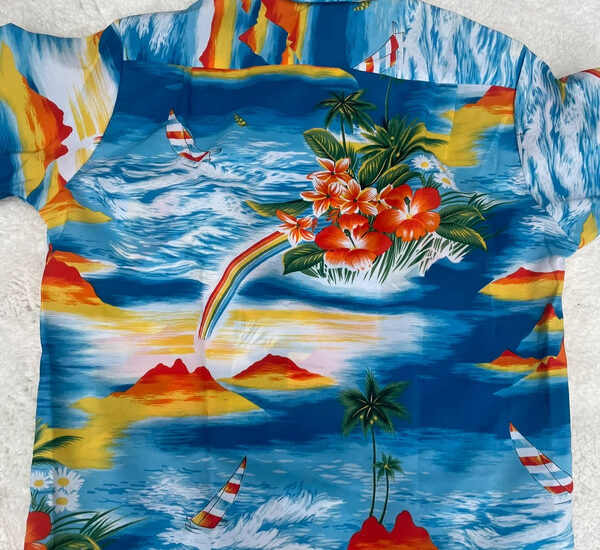
By the 1930s, local tailors and retailers in Honolulu began producing colourful, printed shirts using imported rayon and cotton fabrics. These early Aloha shirts often featured island landscapes, native plants, ocean scenes, and cultural symbols, marking a clear departure from conventional Western menswear. What began as practical, locally made clothing quickly became a visual expression of island identity.
Aloha Shirt Timeline
Early 1900s
Immigrant communities introduce patterned fabrics and tailoring traditions to Hawaiʻi, laying the foundations for the Aloha shirt.
1930s
The first commercially produced Aloha shirts appear in Honolulu. Bright prints and relaxed cuts distinguish them from mainland fashion.
1940s
World War II brings an influx of servicemen to the islands. Returning soldiers take Aloha shirts home, helping spread the style internationally.
1950s–1960s
The Aloha shirt becomes a global symbol of leisure and escape. Popularised by Hollywood films, musicians, and the growing surf culture, designs become bolder and more experimental.
1960s–1970s — Aloha Friday
The Hawaiian Fashion Guild promotes the Aloha shirt as acceptable business attire at the end of the work week. This movement leads to the formal recognition of “Aloha Friday”, encouraging workers to wear Aloha shirts to the office.
1980s–1990s
The concept of Dress-Down Friday (or Casual Friday) spreads internationally, influenced by Hawaiʻi’s Aloha Friday tradition. Loud prints, relaxed fits, and novelty shirts become part of workplace and street style.
Today
The Aloha shirt continues to evolve, embraced by vintage collectors, designers, and streetwear brands as both a cultural garment and a bold fashion statement.
Aloha Friday and Dress-Down Culture
Aloha Friday began in the 1960s as an effort to support local garment manufacturers and promote Hawaiian identity. By allowing Aloha shirts in professional settings on Fridays, the movement subtly challenged rigid Western dress codes. In 1966, the State of Hawaiʻi officially recognised Aloha Friday, helping normalise relaxed dress at work.
This idea eventually travelled to the mainland United States and beyond, evolving into what became known as Casual Friday or Dress-Down Friday. While many workplaces adopted neutral polos or chinos, the roots of relaxed office attire can be traced back to the bold, expressive Aloha shirt — a garment that proved comfort and personality could coexist with professionalism.
A Lasting Legacy
From its multicultural beginnings to its role in reshaping workplace fashion, the Aloha shirt represents more than just a tropical print. It stands for freedom of expression, cultural exchange, and relaxed confidence — values that continue to resonate across surf, vintage, and streetwear communities today.
.
